

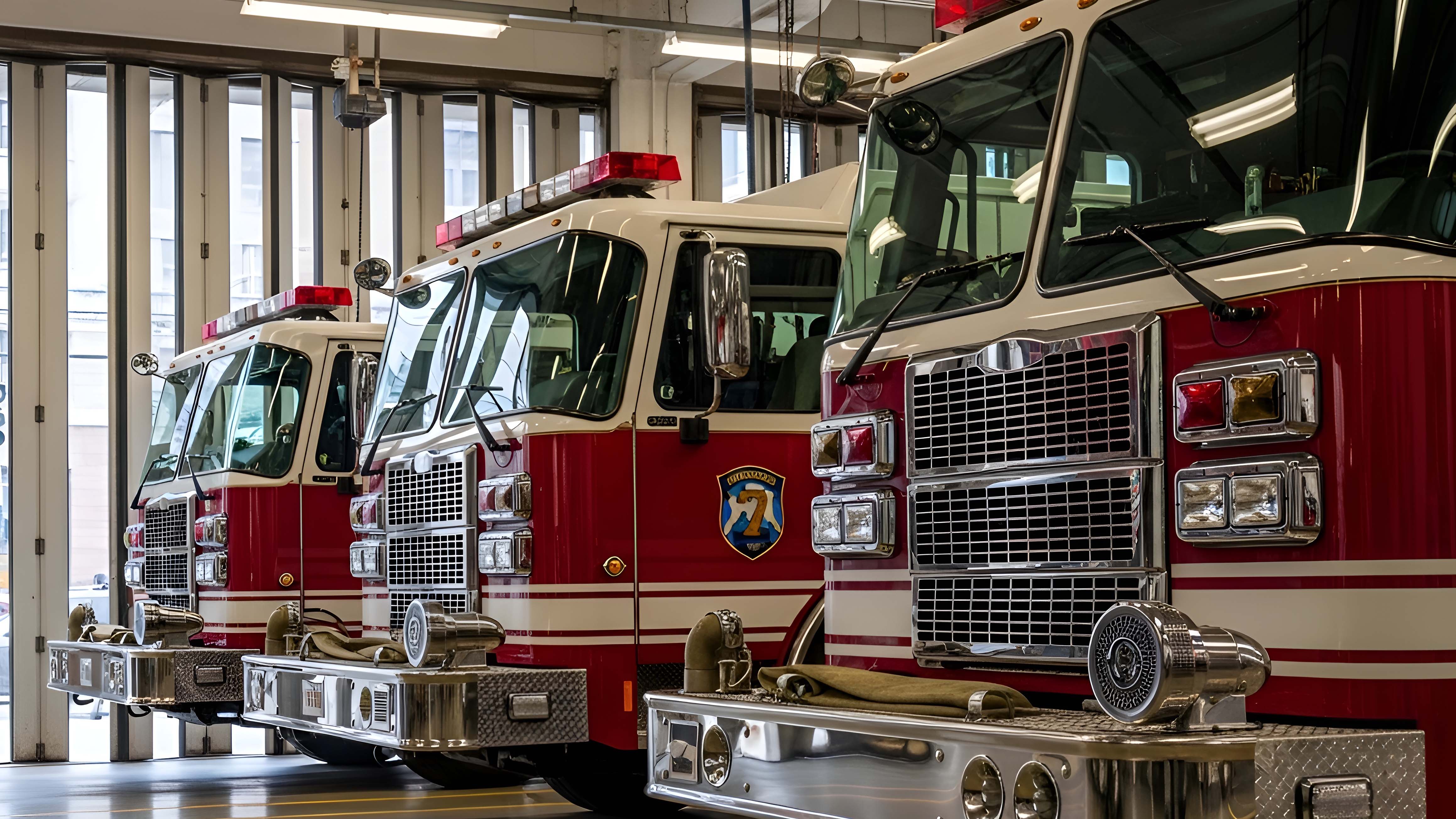
Building a Fire Apparatus Preventive Maintenance Program
A PM program is four documents and one habit: an apparatus inventory, a service-interval schedule (engine hours or quarterly for suppression apparatus, mileage for ambulances and staff vehicles), a qualified-personnel matrix, and a records system, plus the discipline to follow them after the founding member retires. Build it in the six steps below.
Most departments don’t lack maintenance. They lack a program, the difference being that maintenance happens when someone notices, and a program happens on schedule regardless of who’s paying attention. The program version is what NFPA 1911 expects, what insurers and ISO evaluators credit, and what survives the personnel turnover that hits every volunteer department eventually.
Here’s how we’d build one from scratch, based on what works for the departments we service across five states.
Step 1: Inventory what you own
One page per unit: year, make, model, VIN, pump rating, aerial device, engine hours, mileage, in-service date, and the delivery documentation location. Newer trucks typically arrive with manuals on a flash drive or an online portal; older units may have paper manuals scattered across the station. FireRescue1’s 2023 maintenance Q&A recommends keeping at least two labeled copies of maintenance, repair, electrical, and parts manuals per apparatus, a reference library, not a junk drawer.
While you’re at it, record the last known date for each unit’s pump test, aerial inspection, chassis PM, and DOT inspection. The blank cells are your backlog.
Step 2: Which intervals, on which clock?
Different vehicles wear on different clocks:
- Suppression apparatus (pumpers, aerials, rescues, tankers): schedule PM on engine hours or quarterly intervals, whichever comes first, adjusted for call volume and training time, the approach FireRescue1’s 2023 guidance describes. Idle and pump time wear these trucks; odometers lie about it.
- Ambulances and staff vehicles: schedule on mileage, time, or fuel consumption at manufacturer-recommended intervals.
- Small engines (generators, saws, portable pumps): run weekly, service seasonally.
- Anchor each unit’s C-service and pump test in the same month every year, staggered across the fleet so you’re never down two front-line pieces at once.
- Book aerial inspections to the same anniversary logic (requirements here).
- Put winterization in October and the salt-damage inspection in April.
- Let engine-hour triggers interrupt the calendar when call volume spikes.
- FireRescue1, “Fire apparatus maintenance: 10 common questions answered” (2023), https://www.firerescue1.com/fire-products/fire-apparatus/articles/10-fire-apparatus-maintenance-questions-S8vcMEQr7mG922Bf/ (retrieved 2026-07-13). PM interval methodology by vehicle type; manuals library; records-in-court framing.
- Washington Administrative Code 296-305-04507, https://app.leg.wa.gov/wac/default.aspx?cite=296-305-04507 (retrieved 2026-07-13). Example state codification of PM program, records, and technician qualification requirements.
- Firehouse Magazine, “Fire Apparatus Maintenance and Emergency Vehicle Mechanics”: https://www.firehouse.com/apparatus/article/10840191/fire-apparatus-maintenance-and-emergency-vehicle-mechanics (retrieved 2026-07-13). EVT/mechanic shortage.
- Pierce Manufacturing, “Fire Apparatus Service and Maintenance Guide”: https://www.piercemfg.com/fire-apparatus-service-maintenance-guide (retrieved 2026-07-13). Maintenance calendar structure; compliance rationale.
For each apparatus, write the actual interval table: A-service (oil, filters, lube, inspection), B-service (adds transmission/differential/pump transmission fluids, brake inspection), C-service (annual, the deep one, timed to precede the NFPA 1911 pump test, because a truck that’s about to be flow-tested should go in with fresh fluids and belts, as our own pump-testing prep guidance recommends).
Two New England-specific intervals to add: a fall winterization service (checklist here) and a spring undercarriage inspection after salt season, details in fire truck corrosion prevention.
Step 3: Who does what?
Three tiers, in writing:
- Operators/crews: daily and weekly check sheets, the maintenance checklist level.
- Certified technicians: everything involving suppression systems, brakes, steering, drivetrain. NFPA 1911’s qualification expectation, echoed in state regulations like Washington’s WAC 296-305, is EVT, ASE, or factory-qualified personnel for this tier. If your “department mechanic” is a skilled member without certs, define exactly which tasks are theirs and which go out.
- Specialty vendors: annual pump testing, aerial NDT and certification, DPF cleaning, warranty work.
This matrix is also your honest-capacity assessment. The national EVT shortage that Firehouse Magazine’s fleet-manager roundtable documented hasn’t eased in our region, if the plan assumes technician capacity you don’t reliably have, the plan is fiction.
Step 4: Build the calendar
Take the interval table and turn it into actual dates. The pattern that works:
Paper calendars work at three trucks. Past that, use anything with automated reminders, a shared calendar is fine; fleet software is better; the tool matters less than the trigger.
Step 5: Which records system?
Every PM event needs: unit, date, hours/mileage, work performed, parts, who performed it, and any deficiencies with their disposition. Keep test records (pump, aerial, hose, ladder) for the life of the apparatus, they’re your trend data and your resale documentation. The complete retention and format guidance is in apparatus maintenance records; the short version is that the system you’ll actually keep beats the perfect one you’ll abandon.
Step 6: Audit yourself annually
Once a year, sit down with the calendar and the records and answer: Did every scheduled service happen? Were deficiencies closed? Are check sheets complete? Would this file defend us in court or support a warranty claim? FireRescue1’s framing is the right one, would your maintenance records stand up in court? If any answer is no, that’s next year’s fix, and it’s a far cheaper discovery in a self-audit than in litigation or an ISO review (why ISO cares).
The budget conversation that falls out of this audit, what the program costs versus what downtime costs, is covered in what apparatus maintenance really costs.
FAQ
How much should we budget for PM? It varies by fleet age and mix; the honest method is to price your interval table (Step 2) against vendor quotes and in-house labor, then add a contingency for what inspections find. Our maintenance cost guide walks through the framework.
Can a volunteer department realistically run this? Yes, it’s designed for exactly that. The program’s value is that it doesn’t depend on any one person’s memory. Crews do check sheets; the calendar does the scheduling; vendors do technician work. Several of the best-documented fleets we service are volunteer departments.
What if we’re behind on everything? Triage: safety-critical items first (brakes, steering, tires), then overdue annual tests, then routine PM. Don’t let the size of the backlog stop the daily check sheets from starting today.
This article is part of our complete guide to fire apparatus maintenance for New England departments.
Allegiance Fire & Rescue is the authorized New England dealer for Pierce, Road Rescue, Skeeter, BME, and Frontline Command. Our MissionReady program handles scheduled PM tracking and service for enrolled fleets, we note that because we sell it; the program structure above works whoever your vendor is.
Sources
- FireRescue1, “Fire apparatus maintenance: 10 common questions answered” (2023), https://www.firerescue1.com/fire-products/fire-apparatus/articles/10-fire-apparatus-maintenance-questions-S8vcMEQr7mG922Bf/ (retrieved 2026-07-13). PM interval methodology by vehicle type; manuals library; records-in-court framing.
- Washington Administrative Code 296-305-04507, https://app.leg.wa.gov/wac/default.aspx?cite=296-305-04507 (retrieved 2026-07-13). Example state codification of PM program, records, and technician qualification requirements.
- Firehouse Magazine, “Fire Apparatus Maintenance and Emergency Vehicle Mechanics”: https://www.firehouse.com/apparatus/article/10840191/fire-apparatus-maintenance-and-emergency-vehicle-mechanics (retrieved 2026-07-13). EVT/mechanic shortage.
- Pierce Manufacturing, “Fire Apparatus Service and Maintenance Guide”: https://www.piercemfg.com/fire-apparatus-service-maintenance-guide (retrieved 2026-07-13). Maintenance calendar structure; compliance rationale.